
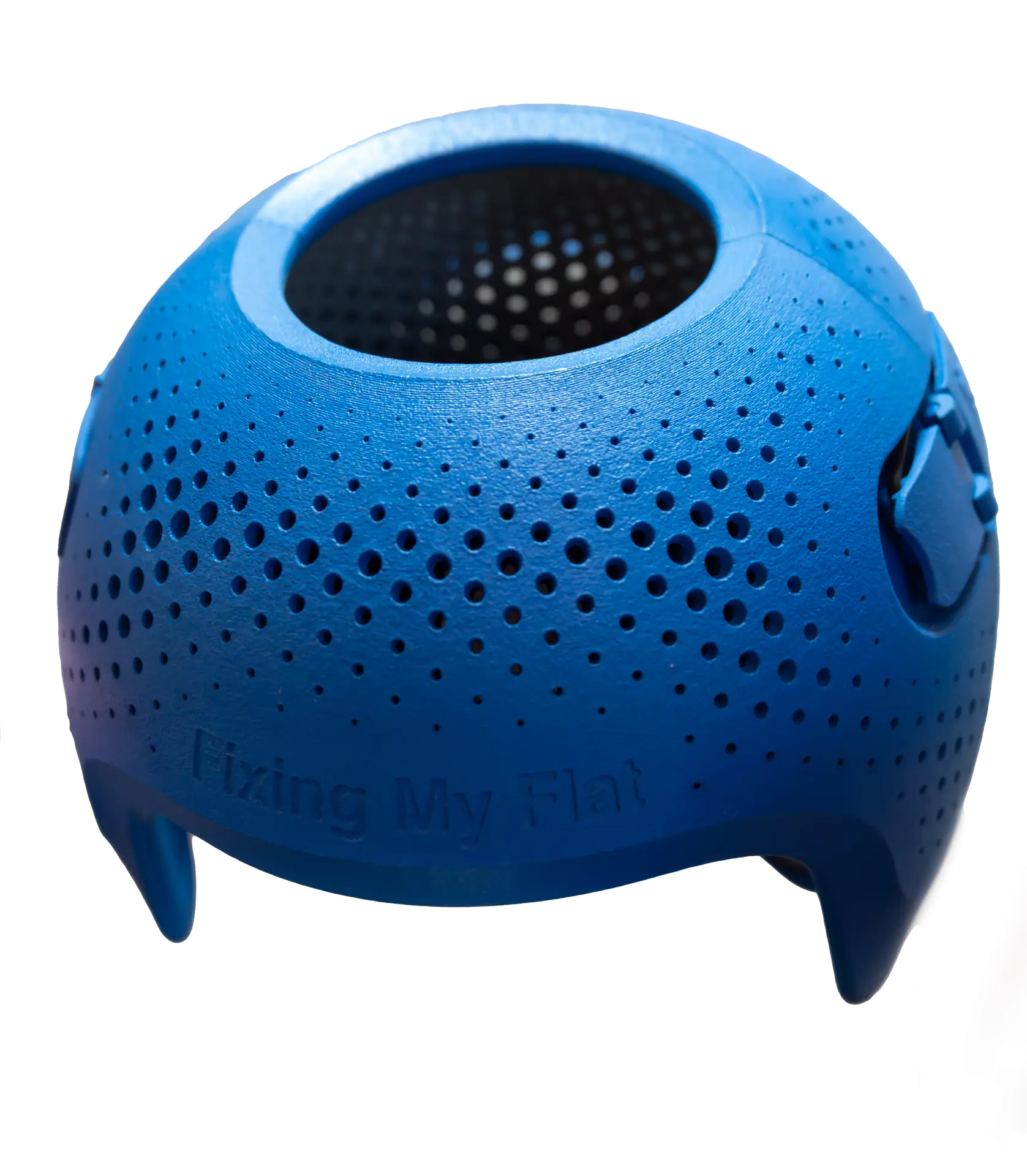
A raw 3D printed part can be strong, accurate, and ready for testing, but that does not always mean it looks finished. Surface texture, visible grain, and slight porosity can all make a part feel more like a prototype than a polished product. When a customer, investor, or internal team member picks up that part for the first time, appearance matters just as much as geometry.
That is where vapor smoothing becomes especially useful. Instead of hiding the fact that a part was additively manufactured, this process improves the outer surface so the part looks cleaner, feels more refined, and gets much closer to the kind of finish people associate with injection molding. At Avid Product Development, we use processes like this to help bridge the gap between fast-turn 3D printing and presentation-ready product development.
For teams searching for a way to make printed parts look more production-ready without jumping straight into tooling, vapor smoothing can be one of the most practical finishing options available. It improves aesthetics, enhances touch and feel, and can make certain parts more suitable for end-use applications as well.
Why Raw 3D Printed Parts Look Different From Molded Parts
Injection-molded parts come out of a tool with a naturally uniform outer surface, so the finish tends to look consistent from edge to edge. A 3D printed part is built layer by layer or particle by particle, which means the surface often has tiny peaks, valleys, or a slightly powdery look depending on the process and material.
Those differences show up quickly on cosmetic parts. A housing, wearable component, or consumer-facing prototype may function perfectly, but if the surface looks unfinished, the whole product can feel less mature than it really is.
Where Surface Texture Shows Up Most
Some parts reveal texture more than others because of their geometry, lighting conditions, or intended use.
- Large flat faces often make subtle surface variation easier to spot.
- Curved exterior surfaces can catch light in a way that exaggerates roughness.
- Handheld parts tend to invite closer inspection because people immediately notice touch and feel.
When appearance matters, surface finishing stops being an optional extra and becomes part of the design strategy. That is especially true when we are building parts meant for demonstrations, product reviews, or pilot production.
What Vapor Smoothing Actually Does to the Surface
At a basic level, vapor smoothing works by softening the outermost layer of a printed part in a controlled way. That slight reflow helps the material settle into the tiny valleys on the surface, which reduces roughness and creates a cleaner, more uniform appearance.
Formlabs explains that vapor smoothing is commonly used to reduce porosity, improve roughness, and help SLS parts reach a surface quality closer to injection molded components. (https://formlabs.com/blog/vapor-smoothing-sls-3d-printed-parts/) (Formlabs)
A Simple Way to Think About the Process
If you imagine a raw printed surface under magnification, it is not perfectly even. It has micro-scale high points and low points. Vapor smoothing helps level those out without requiring heavy manual sanding across the entire part.
What the Process Is Not
It is also helpful to define what vapor smoothing is not.
- It is not the same as coating the part with a thick cosmetic layer.
- It is not a shortcut for poor design or poor print quality.
- It is not meant to completely alter the geometry of a properly manufactured part.
Instead, it is a finishing process that improves the outer skin of the part while preserving the design intent. That makes it especially appealing when we want a cleaner appearance without adding too much labor after printing.
Why Vapor Smoothing Helps Parts Resemble Injection Molding
The biggest visual gain comes from consistency. Once the surface is refined, a part often reflects light more evenly, feels less grainy in the hand, and looks closer to a finished manufactured product instead of a freshly printed sample. That shift can be important when appearance affects perceived quality.
DyeMansion describes vapor smoothing as a chemical surfacing process that produces a sealed, injection-molding-like finish for materials such as PA11, PA12, TPU, and PP. (https://dyemansion.com/post-processing-3d-printing/) (dyemansion.com)
Visual and Functional Gains
Here is a simple way to compare the difference:
| Surface Condition | Typical Result |
| Raw printed part | Visible texture, more drag to the touch, less uniform sheen |
| Vapor smoothed part | More even finish, smoother feel, more presentation-ready appearance |
When the Finish Matters Most
This kind of improvement can make a major difference in a few common scenarios:
- Customer-facing prototypes that need to look polished during meetings or demos.
- Low-volume production parts that need to feel more premium right out of the box.
- Flexible or wearable parts where touch and comfort matter as much as appearance.
A smoother finish can also support better brand perception. People often judge quality before they ever judge performance, so a part that looks refined starts the conversation in a much stronger place.
Materials That Commonly Benefit From Vapor Smoothing
Not every 3D printing material responds to finishing in the same way, which is why material choice matters from the beginning. Two of the most common materials discussed in vapor smoothing workflows are PA12 and TPU because they serve very different product goals while both benefiting from surface refinement.
PA12 is a popular option when we need a good balance of strength, detail, durability, and dimensional stability. EOS notes that PA 2200, a polyamide 12 material, has a balanced property profile and remains one of the most proven materials on the market for polymer 3D printing. (https://www.eos.info/polymer-solutions/polymer-materials/data-sheets/mds-pa-2200) (EOS GmbH)
Why PA12 Is a Strong Candidate
PA12 often makes sense for housings, brackets, enclosures, and functional prototypes because it performs well mechanically while still supporting a high-quality final finish. When that surface is smoothed, the part can look much more suitable for end-use presentation.
Why TPU Stands Out for Flexible Parts
TPU brings a different value to the table because it is flexible, resilient, and often used where comfort or repeated deformation matters.
- Wearables benefit from a smoother surface that feels better against the skin.
- Consumer components can look more finished while keeping their flexibility.
- Functional soft parts can become easier to clean and nicer to handle.
BASF Forward AM notes that Ultrasint TPU materials are designed for flexible, durable applications and can be easily finished through smoothing, dyeing, and coating. (Forward AM)
The key is choosing a material and a post-processing path that support the real-world use of the part, not just its shape. That is one of the reasons we evaluate finishing needs early instead of treating them like an afterthought.
Surface Benefits That Go Beyond Appearance
A smoother part usually looks better, but the benefits do not stop there. Depending on the geometry and application, vapor smoothing can also improve touch, cleanability, and the overall user experience of the finished part.
That matters for products that people wear, handle often, or use in environments where a cleaner outer surface is a practical advantage. A rough print can collect debris more easily and may simply feel less refined during everyday use.
What Changes After Finishing
HP highlights applications where automated post-processing and vapor smoothing contribute to improved comfort, durability, and overall part quality in real-world use cases. (Reinvent HP)
Some of the most useful gains include the following:
- A smoother feel in the hand, especially on visible or frequently handled parts.
- A more sealed outer surface that can be easier to wipe down and maintain.
- Better visual consistency across a batch of parts intended for the same program.
- A more premium impression for prototypes being reviewed by stakeholders.
Those advantages are especially important when a printed component is doing more than proving fit. Once a part is also expected to communicate product quality, finishing becomes part of the product story.
When This Finish Makes Sense for a Development Program
Vapor smoothing is usually the right call when the surface of the part carries real weight in the decision-making process. If the part will be shown to buyers, handled by end users, or used as a bridge between prototype and short-run production, a better finish can create immediate value.
Good Use Cases for a Smoothed Finish
- Presentation prototypes for investor, customer, or distributor meetings.
- Cosmetic housings and covers that need to look closer to production intent.
- Flexible TPU parts where comfort and tactile quality matter.
- Low-volume production runs where tooling is not yet justified.
Where We See the Most Payoff
In our experience, the strongest return comes when a team wants to keep the speed and flexibility of 3D printing while improving how the part is perceived. That can help a product review go more smoothly, reduce the visual gap between prototype and production, and make a printed part feel much closer to the final vision.
At Avid Product Development, we look at finishing as part of the larger product development path. When vapor smoothing fits the material, geometry, and end use, it can be one of the most effective ways to give a 3D printed part the cleaner, more polished look people expect from a manufactured product.


